Sabtu, 26 Mei 2012

Black Sheep interviews Jeffrey Schwarz


WHY DON’T YOU KNOW WHO VITO RUSSO IS?
An interview with VITO writer/director, Jeffrey Schwarz

I am a 35-year-old gay man and, if it weren’t for the movies, I might not know who Vito Russo is. And I’m willing to lay down money that there is a strong chance that you have no idea whatsoever who he is either. If you do, that’s amazing. If you don’t, make sure you see Jeffrey Schwarz’s latest documentary, VITO, as soon as possible because, believe you me, whether you’re gay or straight, you need to know this man’s story.

“I think if you asked the average gay man or lesbian on the street in the 80’s or 90’s who Vito Russo was, 9 out of 10 people would be able to tell you,” Schwarz tells me when we meet at the TIFF Bell Lightbox theatre, the day before VITO is due to screen at the 2012 Toronto Inside Out LGBT Film Festival. “Now, not so much. As time goes on, memory starts to fade. I felt that it was really important to restore Vito to his proper place in the pantheon of gay heroes.”

Russo was an activist at his core. He spearheaded the gay rights liberation movement in New York; he is the founding father of gay film studies as we know it, having literally written the book on the subject (“The Celluloid Closet”); and he fought ferociously to bring attention to the AIDS epidemic, even though he too was slowly dying from the disease. His strength, bravery and relentless determination, as captured so well in VITO, bring me to tears time and time again when I hear of it.

Vito Russo in the Castro district, San Francisco
“A lot of people are having a very similar reaction,” Schwarz tells me, when I confide to him that his film had me bawling my eyes out in my living room. “The movie hopefully does what any movie should, which is illicit an emotional response. There is a lot of history in the film and the main motivation was to tell Vito’s story but also, through his eyes, tell the story of the gay and lesbian civil rights movement, to spark an interest in our history without it being a history lesson.”

Schwarz, as handsome and relaxed in this photo
as he was in person
The fact that the lesson needs to be taught at all demonstrates how far removed today’s generation of gay men and women have become from these initial struggles. While Schwarz wants to enlighten them, he doesn’t necessarily see this distance as negative. “I don’t know that younger people really stop to think about what came before them. In a way, that’s not really a bad thing. They just take it for granted; they get up in the morning and be who they are, which is a beautiful thing, and that’s what Vito wanted. The gay liberation movement at the time was raising issues that they knew wouldn’t come to pass for generations. They helped to create the world that we live in today.”

VITO is Schwarz’s third feature length documentary. When not making features, he works tirelessly (there are currently 119 titles to his credit as director, according to his IMDB page, 300 as producer) creating extras for DVD releases, including masterpieces like RAGING BULL and BLUE VELVET. He is currently raising funds for his next feature, a documentary about another gay icon whose history is becoming more and more obscure, Divine, the world’s premiere drag queen. Before that though, VITO will be hitting HBO (click for details) this summer and Schwarz couldn’t be happier about the sizable audience this opportunity will bring to the film.

“I made VITO for our community but at the same time, I made it for the world. He is obviously inspirational to the gay community but he can certainly inspire anyone, as long as you’re the kind of person who wants to change the world. His story really shows that one person can make a difference.”

Russo, at one of his final and most important demonstrations
Thank you, Mr. Schwarz, for telling his story. Now, you too have made a difference as well.

VITO screens tonight at the 2012 Inside Out LGBT Film Festival, at 7:00 PM, at TIFF Bell Lightbox. The charismatic Mr. Schwarz will be in attendance. Visit the festival website for details.

Kamis, 24 Mei 2012

MOONRISE KINGDOM


MOONRISE KINGDOM
Written by Wes Anderson and Roman Coppola
Directed by Wes Anderson
Starring Jared Gilman, Kara Hayward and Bruce Willis


Captain Sharp: Even smart kids stick their fingers in electrical sockets. It takes time to figure things out.

Wes Anderson is an auteur, through and through. His style is unmistakable – from the deliberate cinematography, wide angled and colourful, to the soundtrack, usually folksy and reasonably obscure. He even works with the same actors on a frequent basis (Bill Murray and Jason Schwartzman, most notably), which only further strengthens the definition of the Wes Anderson universe. His latest, MOONRISE KINGDOM, employs all of these familiar elements but something is missing this time. Aside from Owen Wilson (who has been in every single Anderson film except this one), what is most noticeably absent in MOONRISE KINGDOM, is a point. I mean, there is one; it just hardly seems worth all the trouble.

Working with his regular writing partner, Roman Coppola, who last worked with Anderson on a favourite of mine, THE DARJEELING LIMITED, Anderson weaves yet another quirked out tapestry of a story. Perhaps Anderson’s previous foray into children’s film inspired him to continue trumpeting the youth voice as his two main protagonists here are both barely old enough to watch the majority of Anderson’s repertoire. Sam and Suzy (Jared Gilman and Kara Hayward, both complete unknowns), fall for each other one night while he, having broken away from his scout troop while attending a church play about Noah’s Arc, stumbles upon her in her dressing room before her cue. There is an unspoken understanding that they are both outsiders – well, I assume there is anyway, otherwise I don’t know why else these two would gravitate towards each other – and they agree through correspondence that they should abandon their lives and live in the woods together. They both live on an island in the middle on nowhere and it’s 1965 so I guess that means this sort of arrangement is actually feasible. The kids do well with the morose, disaffected acting style Anderson pulls from all his actors but it sure is bleak to see future generations looking so hopelessly lost.


Aesthetically, Anderson never misses a beat. Every detail, and there are plenty of them, is tended to with great care. Sometimes, this leads to an absurdity that is both uproarious and insightful. At other times though, his films, despite the warmth in the colour tones themselves, can come across as quite cold. MOONRISE KINGDOM suffers from this. As the kids fight for their relationship, their parents and guardian types (the aforementioned Murray, as well as Frances McDormand, Bruce Willis and Edward Norton) bumble around trying to find them and keep their own lives from falling apart. The most I took away from this is that parents should check themselves because their kids are watching them and subsequently learning how to live and love from them at all times. The killer cast does their best to maintain the intrigue and mood but the simplicity of the themes left me wondering if Anderson is running out of things to say. Fortunately, for now, he still knows how to make whatever little amount he has to say look awful pretty.

Rabu, 23 Mei 2012

WHERE DO WE GO NOW?


WHERE DO WE GO NOW?
Written by, directed by and starring Nadine Labacki

Nadine Labacki’s follow up to CARAMEL, her brilliant debut, entitled WHERE DO WE GO NOW? won the People’s Choice Award at last year’s TIFF. I was shocked at the time because I had heard nothing about it before then. I am even more so now that I’ve seen it. I do not see anything remotely satisfying about this farce of a film in which a tiny Middle Eastern village is torn apart between Muslim and Christian beliefs. The women cannot take losing any more of their sons or husbands so they do their best to hide the real world from the men. That plan only works for so long though, mostly because it’s a dumb plan. I get that it’s a fable but the subject in this case is too serious to be trivialized to this extent. At one point, there is a Romeo & Juliet romance hinted at that ultimately goes nowhere and inspires the characters to break out into song. I almost laughed out loud then but an hour later, I was desperate for them to sing again. As horrible and ridiculous as that was, it couldn’t be any more so than all the women drugging the men of the village with hash so that they could distract them long enough to dispose of all their artillery. Then they did sing again and I remembered how bad that was. Then I just wanted it to end. WHERE DO WE GO NOW? is definitely not this person’s choice.


HYSTERIA


HYSTERIA
Written by Stepher Dyer, Jonah Lisa Dyer
Directed by Tanya Wexler
Starring Hugh Dancy, Maggie Gyllenhaal and Rupert Everett

In Victorian London, the word, “hysteria”, was a medical term used to define the general restlessness and anxiety of the city’s housewives and the occasional tirade that stemmed from said affliction. Of course, we now know this as mere boredom but at the time, the menfolk didn’t know what to do with all these hysterical women. The deeper implications of how the word fully strips women of any power or stature they might have are merely touched on in Tanya Wexler’s HYSTERIA. Instead, the focus lies more with what was invented to deal with the issue, the vibrator. But while you might expect this topic would set the film abuzz with excitement, it doesn’t. Instead, the batteries die out before you get to the good part.


Senin, 21 Mei 2012

Best of Black Sheep: Black Sheep interviews Daniel Radcliffe


THE BOY WIZARD GROWS UP
An interview with THE WOMAN IN BLACK star, Daniel Radcliffe

At this point in my career, I’ve interviewed a fair amount of famous filmmaker types. Still, there was something, dare I say magical, about meeting Daniel Radcliffe - the man, now 22, who played the most famous young wizard the movies have ever seen and spearheaded the biggest film franchise in history. And what did I say to him first thing after congratulating him on his first post HARRY POTTER outing?

“I have to be honest with you; I probably wouldn’t have seen THE WOMAN IN BLACK if I weren’t interviewing you. I just tend to avoid horror films whenever possible really.” I couldn’t believe these words had just come out of my mouth.

Radcliffe’s response: “Honestly, if I weren’t in this film, I’m not sure I would have seen it either.”

Don’t take that out of context. Like me, Radcliffe tries to avoid horror films whenever possible because they “terrify” him. (He cites Stanley Kubrick’s THE SHINING as a personal favourite though.) In fact, it only takes a few moments with him to absorb just how excited he is about THE WOMAN IN BLACK, directed by James Watkins, even though he does not believe in ghosts himself.

“I have never seen a ghost nor do I expect to,” Radcliffe states. “There always seems to be a co-relation between those who have seen ghosts and those who believe in them. As I don’t believe in them, I find it highly unlikely that I will ever see one.” The young man’s sharp sense of sarcasm is unexpected but welcome.

As Arthur Kipps in The Woman in Black
Of course, there is another reason Radcliffe wants to share this new film with his fans. It is an opportunity for the world to see him like they never have before, without the spectacles and sans scar.

“I am under no illusion that people are going to see this film and think, ‘Oh my God, he isn’t Harry Potter anymore. This is a total fucking transformation!’” he says, rather astutely. This is when I lose my train of thought though because suddenly I can’t seem to focus on anything other than how "Harry Potter" just said “fuck”. He does elaborate on his point though. “I can’t focus too much on how I am being perceived at any one time. It’s not constructive for me to think that way. Once people are used to me popping up in other things, it won’t be so much of a difficult stretch.”

Smiling for the cameras at The Woman in Black premiere
One might also think it something of a stretch to go from working on a huge franchise like HARRY POTTER to a film that reportedly cost under $20 million to produce. “People always say to me, if I do a smaller film, ‘Bet it wasn’t like this on Potter!’ and my reaction is ‘No, it was worse.’ People assume that because we had so much money and time, that it must have been a really smooth operation. It wasn’t; it was chaos. All film sets are chaos. Organized chaos, but chaos.”

Still, it was his first time away from the film home he had spent years growing up in. Fortunately, there was a fair amount of familiarity for Radcliffe to draw from. “It’s very hard to work on Potter and then do another British film without knowing anybody.”

On The Woman in Black set
Radcliffe read the script for THE WOMAN IN BLACK on the last day of shooting HARRY POTTER AND THE DEATHLY HALLOWS PART 2 and started work on the film six weeks later, with four weeks of intense dance training in between for his successful Broadway run in HOW TO SUCCEED IN BUSINESS WITHOUT REALLY TRYING. I would’ve taken a year off personally but Radcliffe is clearly not the kind of guy who likes to sit still for too long. He could barely even sit still during the fifteen minutes we spoke.

“My thing is rather than getting back on the horse, why not just stay on it?” he quips like the cheeky, little Brit he is. Having met him now, I can see Radcliffe eventually riding that metaphorical horse right into the ground. That is, unless he doesn’t get the sudden urge to get off the horse and stand next to it naked first.

Minggu, 20 Mei 2012

SPEECHLESS


SPEECHLESS
Written and Directed by Simon Chung
Starring Pierre-Mathieu Vital and Gao Qilun

Hong Kong director, Simon Chung’s latest film, SPEECHLESS, rendered me just so when I first began to immerse myself in its quiet and patient beauty. It embodies a truly progressive movement in gay cinema, one where stories transcend the inherit issues that come with being gay without sacrificing them whatsoever. SPEECHLESS boasts a solid and sensitive screenplay that allows Chung’s visual language as a director to shine through. And you’ve gotta love a movie that starts with a hot French guy completely disrobing for a naked dip in a river somewhere in the middle of the incredibly picturesque South of China.


This naked man, known mostly throughout the film as the foreigner and played by Pierre-Mathieu Vital, says nothing to the Chinese police officers who bring him in after he is found on a river bank, passed out and being poked at with sticks by local children. They aren’t sure at first if he is just being difficult or not but eventually send him to a psychiatric hospital for treatment under the belief that his inability to speak is trauma induced. They are correct in their assumption and the rest of the film becomes a journey to piece together precisely what this mystery man is running away from. Luke, as we come to know the foreigner’s name to be later on, is joined by Jiang (Gao Qilun), a nurse who helps Luke escape the authorities to pursue his past. Their chemistry is undeniable.


The film may be called SPEECHLESS but Chung is anything but that, showcasing his voice as a director loud and clear with his latest. He exhibits great promise and confidence as a director with the potential to play to audiences around the world. By saying very little in the moment, SPEECHLESS speaks volumes long after its done.

SPEECHLESS has its Canadian Premiere at the 2012 Inside Out LGBT Film Festival in Toronto on Wednesday, May 22. Visit the festival website for more details.

Sabtu, 19 Mei 2012

NAKED AS WE CAME


NAKED AS WE CAME
Written and Directed by Richard LeMay
Starring Ryan Vigilant, Benjamin Weaver, Karmine Alers and S. Lue McWilliams

If you’re the type of person who likes your movies melancholic and melodramatic, than NAKED AS WE CAME is the movie for you. This is not to say that the film doesn’t satisfy on these levels, but rather that you have to be prepared to dive into a particular mood for the entirety of the film. If you are properly armed to handle the onslaught of yelling and screaming in this family drama, then you may actually leave in tears. With films like this one, that is the point.

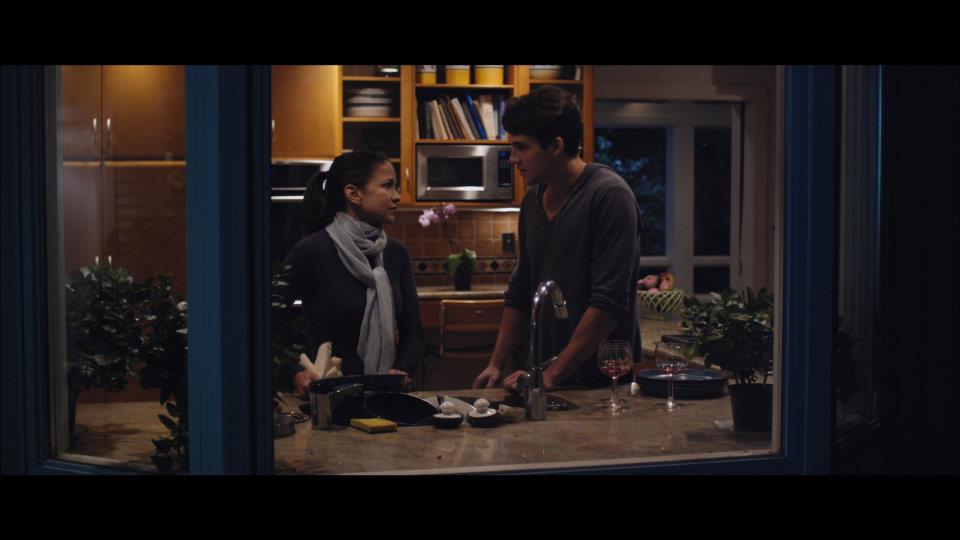
Elliot and Laura (Ryan Vigilant and Karmine Alers) are hardly model children. They run the family laundry business in New York City like dutiful offspring, but they bear so much resentment toward their deceased father for saddling them with this responsibility (let alone destroying their family) and their still living mother for, well, just being a bad mother to them while they were growing up. When they return home for the first time in over a year to insist that their aging mother (played with great fervor by S. Lue McWilliams) return with them to live out the rest of her years, they find that she barely has days left to live. To further aggravate the situation, which is truly unnecessary with these three high strung characters, the mother has a live-in houseguest that no one can quite figure out (Benjamin Weaver).


I often did not understand why everyone in NAKED AS WE CAME felt the need to yell all the time. Sometimes I laughed out loud at how ridiculous they were all being but other times, I was unexpectedly punched in the stomach by how honest they were being. And while it may feel claustrophobic at times to be trapped with this much drama, I came out the other side feeling a little less burdened and little more learned.


Black Sheep was also fortunate enough to interview the film's director during the festival and that goes a little something like this ...

LET'S GET NAKED
An interview with NAKED AS WE CAME writer/director, Richard LeMay

Richard LeMay wears many a hat, from producer to writer and director, depending on the day. This weekend he is in Toronto for the Inside Out LGBT 2012 Film Festival and wearing all his hats at once to present his latest film, NAKED AS WE CAME. Given how much responsibility that has to come with, LeMay is as cool as can be when we chat just hours before his film screens.

“I really didn’t know what I was doing at first,” LeMay explains when I ask how he managed to begin building his impressive independent resume. “I didn’t go to film school. I just started making movies.” This does not always bode well for the finished product but LeMay credits the LGBT audience for providing him with the chance to develop his craft. “When it comes to this market, there is always a need for content. This is not necessarily a good thing because my first couple of movies weren’t very good.”

LeMay himself
His latest, NAKED AS WE CAME, is quite good. It still reads like an independent feature made by an untrained filmmaker but the emotion is quite palpable and effective, proving LeMay’s strength with character and story. This particular story finds a brother and sister (Ryan Vigilant and Karmine Alers) returning home to find out about and subsequently deal with their mother’s (S. Lue McWilliams) imminent death. I found it to be quite depressing but LeMay sees it quite differently.

“I’ve always thought of it as a funny movie,” he begins. “When you see it alone in your living room, its a very different experience from seeing it with a crowd of people.” He’s probably right considering alone in my living room is exactly how I saw it.

LeMay drew from experiences with his friends for the inspiration behind NAKED AS WE CAME. In one year, seven of his closer friends lost loved one’s and one in particular, actually had the chance to say goodbye before it happened. “It is one of the most painful things one can go through but it is also an incredible gift because not everyone gets the opportunity.” It is not directly about any one experience but LeMay still tried to be as honest as he could be. “I just tried to be as truthful to where I thought it could go.”

LeMay, second from right, on Naked as We Came set
LeMay and I chat a bit about the present and future state of gay cinema before I let him go to experience the glorious Toronto weather. Something he says about a question he had a recent screening though I think best captures where the genre is heading. “This one guy commented that the film has a very European ending and that he wishes it could have been a happy one instead. For me, it is a happy ending though. These characters are not succumbing to their patterns; they’re breaking them.”